Iceland -
an Introduction
Hot Springs and Outerworld Landscapes
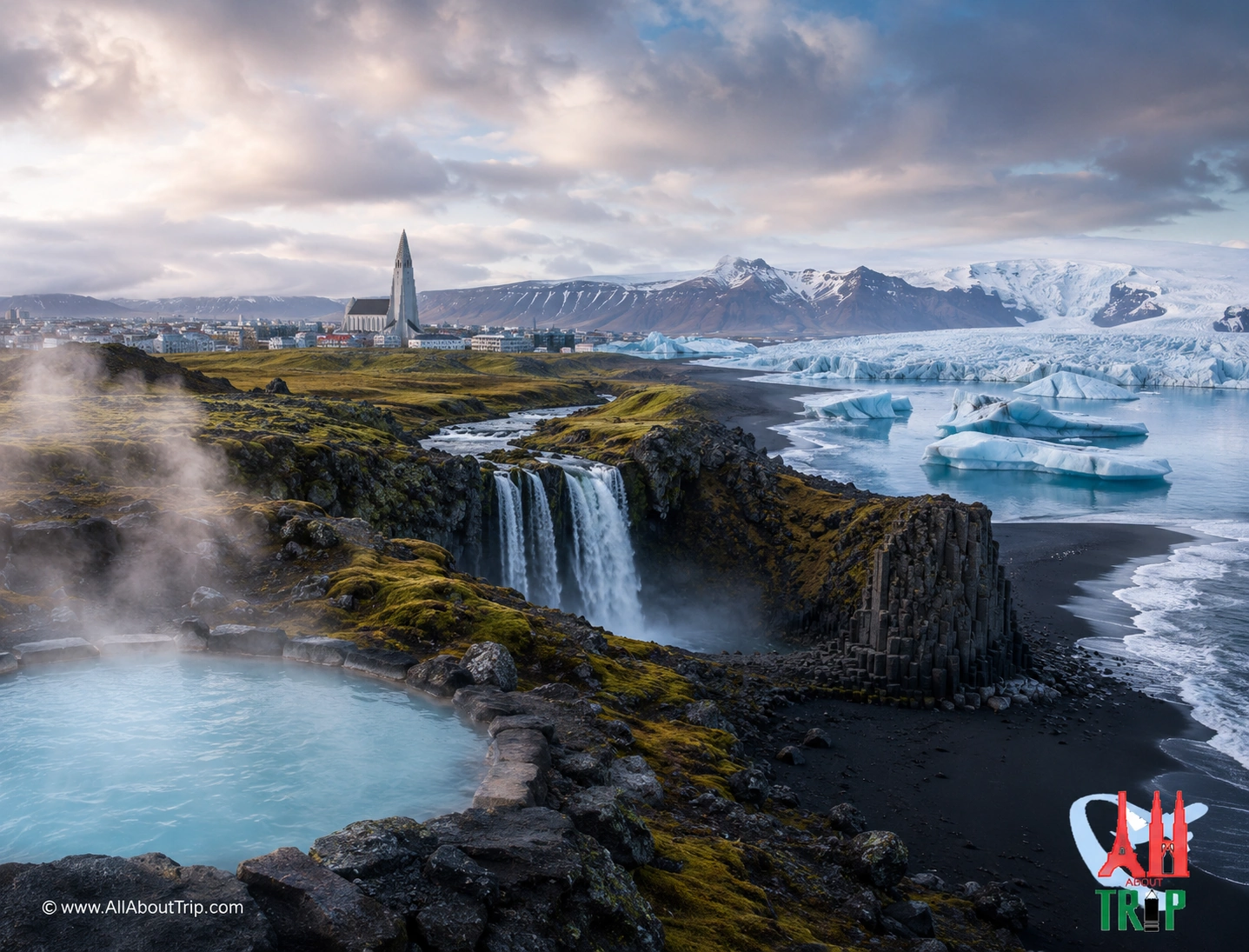
Iceland doesn’t feel like a country so much as a series of beautiful accidents. One moment you're driving through moss-covered lava fields that seem borrowed from another planet, and the next you're standing beside a waterfall powerful enough to make the ground tremble beneath your feet. Steam rises from the earth, glaciers stretch toward the horizon, and the weather changes its mood every ten minutes. For a destination that's surprisingly compact, Iceland packs an astonishing amount of drama into a short trip.
With four to five days, the best approach is to focus on the South Coast and the famous Golden Circle. This route showcases many of Iceland's most iconic landscapes without requiring endless hours behind the wheel.
The adventure begins the moment you land in Reykjavík. Rather than rushing straight into sightseeing, embrace Iceland's slower rhythm. Many travelers make their first stop at the Blue Lagoon, where milky-blue geothermal waters wind through black volcanic lava fields. After a long flight, soaking in warm, mineral-rich water while cool Icelandic air drifts across your face feels less like a tourist activity and more like a ritual of arrival.
Later, wander through Reykjavík's colorful streets. The city feels intimate rather than overwhelming, filled with cozy cafés, quirky boutiques, and murals hidden around unexpected corners. Climb to the top of Hallgrímskirkja for panoramic views over rainbow rooftops and distant mountains. Enjoy fresh seafood in the evening and, if you're visiting between September and April, keep an eye on the sky. Iceland has a habit of surprising people after dark.
From Reykjavík, head out to explore the Golden Circle, Iceland's classic introduction to its geological wonders. Begin at Þingvellir National Park, where you can literally walk between the North American and Eurasian tectonic plates. It's one of the few places on Earth where continental drift becomes visible, transforming a textbook concept into a landscape you can stand inside.
A short drive away, the geothermal area of Geysir serves as a reminder that Iceland is very much alive beneath the surface. While the original Geysir erupts only occasionally today, nearby Strokkur reliably launches boiling water high into the air every few minutes. Everyone tries to capture the perfect photo, and almost everyone misses the exact moment.
The route continues to Gullfoss, one of Iceland's most magnificent waterfalls. Here, glacial water plunges into a rugged canyon in two dramatic stages, sending mist high into the air. On sunny days, rainbows often appear above the falls, making the scene look almost impossibly perfect. Spending a night in the countryside adds another layer of magic, especially far from city lights.
Continue east along the South Coast, a route packed with so many highlights that it feels unfair to other countries. The first major stop is Seljalandsfoss, where a pathway allows visitors to walk behind the curtain of falling water. You'll get wet, but you'll also experience one of the most memorable perspectives in Iceland.
A little farther along stands Skógafoss, a waterfall so perfectly formed it looks designed for a fantasy film. Climb the staircase beside it for sweeping views of the surrounding landscape and the river winding toward the sea.
The journey eventually reaches the black-sand beaches near the village of Vík. At Reynisfjara, volcanic sand stretches beneath towering basalt columns while powerful Atlantic waves crash against the shore. The contrast between black sand, white surf, and dark sea stacks creates one of the most striking coastal scenes in the world. It feels wild, untamed, and wonderfully cinematic.
If time allows, continue farther east toward one of Iceland's greatest natural spectacles: Jökulsárlón Glacier Lagoon. Here, icebergs break away from a glacier and drift slowly through a serene lagoon before eventually reaching the ocean. Some glow brilliant blue, while others appear sculpted by artists rather than nature.
Just across the road lies Diamond Beach, where chunks of crystal-clear ice wash ashore and sparkle against black volcanic sand. The landscape changes by the hour, making every visit unique. Some pieces resemble diamonds, while others look like frozen sculptures abandoned by giants.
Rather than trying to fit in endless attractions, consider slowing down and allowing Iceland to reveal itself at its own pace. Join a glacier hike on Vatnajökull, take a boat tour among floating icebergs, go whale watching from Reykjavík, or spend time discovering hidden hot springs and quiet villages. Often, the memories that last longest are the unplanned moments: an Icelandic horse grazing beside the road, sunlight breaking through storm clouds, or a rainbow appearing where there was none a minute earlier.
The beauty of Iceland isn't found only in its famous landmarks. It's in the feeling that nature still writes the rules here. Roads curve around lava fields because the lava came first. Waterfalls appear without warning. Mountains emerge from mist like secrets being revealed. In just a few days, you'll see extraordinary places, but you'll also experience something harder to describe a landscape that feels alive, unpredictable, and endlessly capable of wonder. Long after you've left, you'll find yourself scrolling through photos and realizing that somehow, impossibly, Iceland looked even better in real life.